The Allure of a World Champion
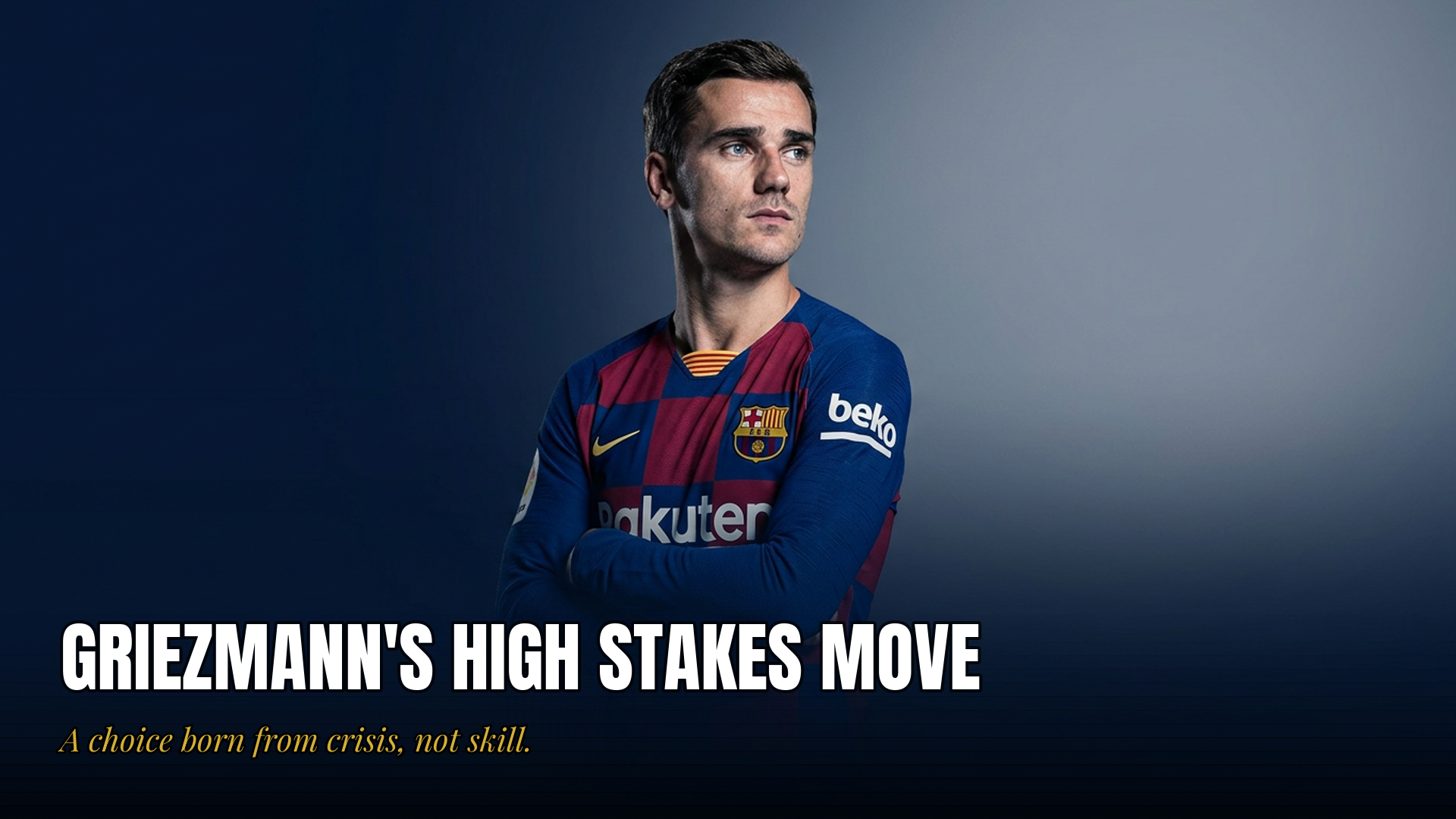
Barcelona’s decision to activate Antoine Griezmann's €120 million release clause in 2019 was not just another high-profile transfer fluke; it was a product of timing and circumstance. At the time, Griezmann was riding the crest of his World Cup triumph with France, where he emerged not only as a star on the pitch but as a symbol of victorious ambition. Such global recognition naturally inflates a player's market value, and for Barcelona, facing pressure to maintain their trophy-winning status, Griezmann seemed like the key to reinvigorating an already illustrious squad. From this perspective, his acquisition was not merely about buying a player but tapping into a proven winner, a point that strategically served Barcelona's desire to swim with Europe’s elite. This signing was less an error in player valuation and more a calculated bet on sustained excellence, albeit timed with unfortunate financial foresight.
Performance on the Pitch
When Antoine Griezmann stepped onto the Nou Camp pitch, he was expected to light up Barcelona with his World Cup-winning form. Scoring 35 goals in 102 appearances, he didn't quite mirror his Atletico Madrid heroics but delivered enough to keep fans hopeful. His performance in pivotal matches, such as scoring in the 2021 Copa del Rey final, showed glimpses of his talent. Yet, the issue wasn't Griezmann's output but Barcelona's sky-high expectations set against their collapsing financial picture. On one hand, his contributions in goals and moments were significant enough to justify his talent; on the other, they never quite matched the heavy financial burden he represented. The perceived mismatch between Griezmann’s fees and his on-field results was more a reflection of Barcelona’s internal chaos than his individual shortcomings.
The Real Crisis: Barcelona's Financial Collapse
The true drama at Barcelona during Griezmann's time wasn't on the pitch but in the books. By 2021, financial mismanagement had cascaded into a crisis. The club's debt skyrocketed to €1.35 billion, manifesting as a debilitating weight that forced seismic decisions. Historic cuts to LaLiga's salary cap were a blunt reminder of the fiscal constraints choking the club. In a world where maintaining Lionel Messi should have been sacrosanct, economic and structural obstacles led to his exit. Griezmann was collateral damage. Reducing the wage bill became a non-negotiable task. Unlike the perception that Griezmann was shuttled off due to inadequate performance, it was Barcelona's insurmountable financial distress that called the shots. The Griezmann storyline is inextricably woven into this broader tapestry of a club once soaring, now plummeting under the weight of its past financial machinations.
The Loan Back to Atlético: A Marriage of Convenience
Griezmann’s loan back to Atlético Madrid wasn’t a retreat from failure, but rather a strategically crafted move framed by financial exigencies. Barcelona orchestrated a deal filled with enforced permanence through mandatory playtime clauses. The arrangement obliged Atlético to secure Griezmann outright, contingent upon his on-field involvement, which more so aligned with Barcelona's need for immediate financial relief than any narrative of rejection. For Atlético, the arrangement capitalized on a known quantity returning to favorable conditions. In this context, Griezmann's transition wasn’t about unmet expectations, it was about Barcelona’s forced pragmatism in the face of harsh fiscal realities.
"The financial restructuring left Barcelona needing to rescale their ambitions as debts reached unmanageable heights."
The Cut-Price Return and Its Aftermath
Ultimately, the final act in Griezmann’s Barcelona chapter came with a significantly reduced fee, a mere €20 million after add-ons. This cut-rate return to Atlético seemed to underline misjudgments, not about Griezmann's talent, but Barcelona's dire fiscal circumstances. Here was a player whose abilities were never truly in question, evidenced by his reinvigorated form upon rejoining Atlético. His journey back cemented his status as a lynchpin in their squad anew, highlighting that the fault line lay not within Griezmann's quality but the original signing strategy skewed by Barcelona’s financial desperation. It was a transaction dictated by necessity rather than pure sporting logic, symbolizing the era of economic crises that haunt many top clubs today.
Barcelona’s Transfer Strategy: A Sign of the Times
The Griezmann saga at Barcelona serves as a profound case study of how financial forces drive sporting decisions, often overshadowing sporting competency itself. The saga underscores something critical: it wasn't merely about misjudging a player’s worth. It was about miscalculating financial stability and repercussive pressures that dictated terrible trade-offs, like Messi’s exit and Griezmann's undervalued shuffle back. This narrative offers a somber lesson about financial stewardship, igniting awareness that at clubs like Barcelona, financial missteps amplify risks on every level—dragging even World Cup heroes into quagmires of economic reckoning. Future strategic planning and fiscal discipline are paramount; otherwise, history may continue to repeat in other kits, on different stages.