The Backbone: Pep Guardiola's Unique Vision
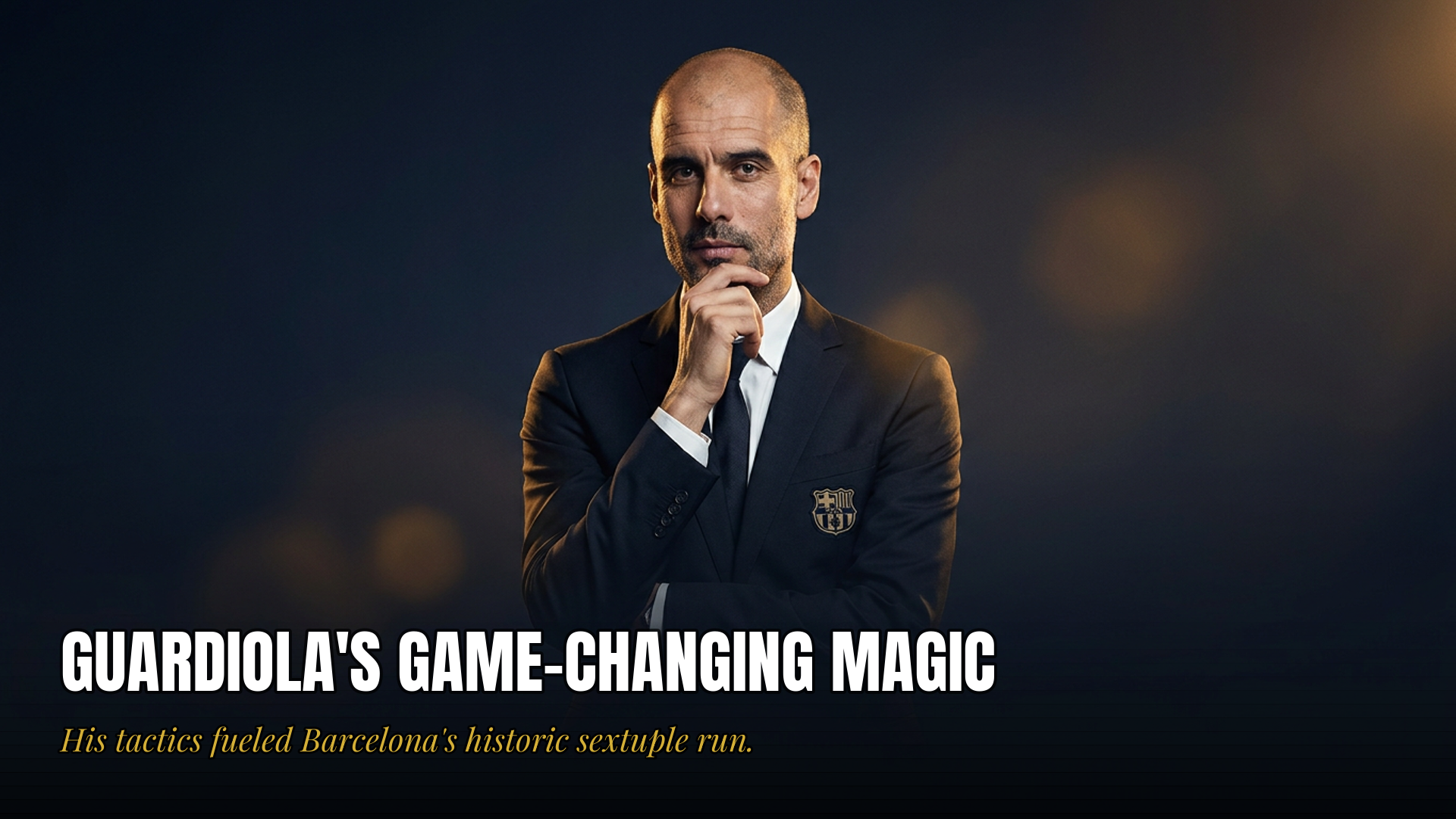
Pep Guardiola's arrival at Barcelona in 2008 marked a paradigm shift not just for the club, but for football as a whole. Despite his inexperience at the highest level, Guardiola's far-reaching impact in his first season was a testament to his visionary approach. At just 38 years old, he was stepping into a role many thought required more seasoned hands. Yet, his youth belied a depth of understanding and a willingness to disrupt conventional football narratives. Guardiola's tactical genius and commitment to an adaptive, fluid style of play became the backbone of Barcelona's success during the 2008-09 season.
Guardiola's philosophy was clear: win through possession. But this was no mere emphasis on keeping the ball; it was about control, territory, and dictating the tempo of games from start to finish. He took the seeds of Johan Cruyff's total football and cultivated them into a comprehensive system that maximized the individual talents of his squad while never allowing ego to overshadow the team's collective goals.
The youthful manager's approach was not merely tactical but psychological as well. Guardiola instilled a culture of humility and relentless work ethic among world-class players who might otherwise be content to rest on their laurels. It is here that his transformative influence truly turned the tide. By uniting the varying strengths of his squad under a cohesive vision, he laid the foundation for a season that would challenge the very limits of what a football club could achieve in a single year. He managed to do this in his first year managing a senior top-flight team. His fresh ideas and tactical innovations became the blueprint for sustainable success and marked a new era in football management.
Tactical Mastery: Beyond Tiki-Taka
While 'tiki-taka' often gets the headline for Barcelona's success under Guardiola, the reality is that his tactical mastery went far deeper than this singular concept. Guardiola implemented a system that was not only about short, intricate passing but also about flexible formations and intelligent pressing. This versatility allowed Barcelona to adapt mid-game, overwhelming opponents who were prepared only to counter a single style. This was a significant departure from the rigidity that characterized many of Europe's elite teams at the time.
Moreover, Guardiola's use of space and positioning transcended the era's tactical norms. His innovative strategy of deploying a false nine, exemplified by Lionel Messi often drifting back into midfield, was a stroke of genius that baffled opponents. Defenders were caught in a dilemma: follow Messi away from their defensive lines and risk leaving space vulnerable, or hold position and see him unchallenged. Either way, Barcelona exploited the gaps created efficiently.
Beyond Messi, the entire squad was tailored to fit within this intricate system. Players like Xavi and Andrés Iniesta operated as central pivots, orchestrating the flow of the game with precision passing and keen spatial awareness. These tactics ensured that each player was actively involved in both attack and defense, reinforcing a team-oriented mindset which was critical to overwhelming teams at both a domestic and European level.
Guardiola did not shy away from rotation and experimentation, showcasing a trust in his entire squad that paid dividends. By integrating young talents such as Pedro and Sergio Busquets into the first team, Guardiola ensured a seamless continuation of style even when injuries or suspensions occurred. This system succinctly demonstrated that the totality of Barcelona's team cohesion and Guardiola's flexibility in adapting strategies gave them an edge over their competitors. It laid the groundwork for Barcelona's unprecedented success.
Achieving the Treble: The Perfect Execution
The 2008-09 season was one of immaculate execution, culminating in a historic Treble — a feat that had never been accomplished by a Spanish club before. This iconic period wasn't characterized simply by winning trophies; it was about embodying Guardiola's strategic ethos at every turn. La Liga saw Barcelona dismantling their opposition, most memorably in a resounding 6-2 victory over Real Madrid at the Santiago Bernabéu. This legendary match was more than just a victory; it was a demonstration of tactical supremacy where Barcelona's relentless pressing game and sharp counterattacks showcased Guardiola's influence.
In the Copa del Rey, Barcelona's dominance was on full display as they outclassed Athletic Bilbao with a 4-1 win. This performance underscored the team's adeptness in exploiting weaknesses across different competitions, maintaining an unwavering pursuit of success in each domestic endeavor.
The crown jewel, however, was the UEFA Champions League final against Manchester United. Played at the Stadio Olimpico in Rome, Barcelona clinched a 2-0 victory, with Samuel Eto'o and Lionel Messi both finding the net in a strategic display. This match was not just a victory but a testament to Guardiola's meticulous planning and ability to execute a game plan to perfection. By nullifying United's key threats and dictating the tempo of the game, Barcelona epitomized the strategic acumen that was becoming synonymous with Guardiola's management style. The Treble not only marked their superiority in world football but solidified Guardiola's reputation as a mastermind who could convert tactical innovation into tangible success.
From Treble to Sextuple: Cementing a Dynasty
Following the Treble, Barcelona's insatiable hunger for titles did not diminish as they sought to complete an unprecedented Sextuple. This ambition and eventual triumph was a testament to Pep Guardiola's ability to maintain and indeed heighten his team's competitive edge across various continents and competitions. The Spanish Super Cup victory over Athletic Bilbao encapsulated the team's capacity to reset and rise to new challenges without falling prey to complacency.
This was followed by the UEFA Super Cup clash against Shakhtar Donetsk, where Barcelona showcased their adaptability by securing a narrow 1-0 victory. The match tested their resilience, demonstrating their capability to pivot and adapt when intricate play and fluid tactics met with stiffer resistance. Guardiola’s side evinced the mental toughness required to secure victory against any opponent, in any context.
The pinnacle of the Sextuple was reached in December's FIFA Club World Cup final against Estudiantes. The match unfolded as yet another chapter in Barcelona's storied year, highlighting the tactical maturity they had developed under Guardiola's tenure. Despite falling behind, Barcelona displayed their hallmark perseverance to eventually win 2-1, with Messi's extra-time winner epitomizing their determination.
This ability to triumph under pressure and adapt strategies when faced with setbacks exemplifies Guardiola's genius and his influence on the team's mindset and execution. The unprecedented achievement of winning six trophies in a single calendar year not only solidified Barcelona's dominance but underscored Guardiola's role as a strategic innovator whose methodologies transcended conventional football wisdom to etch his team into the history books.
"Pep Guardiola's vision didn't just redefine Barcelona; it reinvented football, turning a team of stars into an unstoppable, cohesive force against which others could only hope to survive."
The Legacy of Guardiola’s Revolution
Pep Guardiola's tenure at Barcelona in 2009 wasn't merely a period of remarkable success — it was a revolutionary chapter that redefined football management. His strategies went beyond tactics, embedding a culture of relentless precision and adaptability within the squad. While players like Lionel Messi and Andres Iniesta dazzled on the pitch, it was Guardiola's vision that unleashed their collective potential, setting a new bar for what club football systems could achieve. The influence of his methods is still evident today, as clubs worldwide strive to replicate the blend of style and substance that characterized his iconic Barcelona side. Guardiola’s legacy, therefore, extends beyond the trophies he won — it lies in his enduring contribution to the very evolution of the game, shaping how football is played and understood at the highest levels.